
Event Video Production: Behind the Scenes of Next Step’s Comic Book Celebration
June 18, 2026
What happens when young people don’t see themselves represented in the stories around them? For a group of participants at Next Step, the answer was simple: create their own. That’s the story at the heart of this event video production project, which centered on a youth-led comic book initiative designed to raise awareness about sickle cell disease and empower young people to share their experiences.
Next Step works with young people living with chronic illnesses. It helps them build community and express themselves through creative programs centered on art, music, and mentorship. One project began when teens in the organization’s STRIVE mentorship program noticed something missing from the superhero stories they loved. While many superheroes had weaknesses, they couldn’t think of one who was living with a chronic illness, specifically sickle cell disease. So they created Kara Jackson, a superhero whose experiences reflected challenges they understood firsthand.
Earlier this year, Next Step celebrated the release of the latest When Lightning Strikes comic book at a special event at LabCentral in Cambridge. Emceed by former New England Patriots cornerback Devin McCourty, the event brought together young creators, healthcare advocates, sponsors, and community members to recognize the project’s impact.
When the organization approached us about capturing the event, they had a challenge many nonprofits face: How could they turn a single event into content that continues advancing their mission long after the event is over?
Their goal of the project wasn’t simply to document what happened. They hoped to bring the event to other cities. They needed content that could help attract sponsors, engage future attendees, and demonstrate the impact of the program. Rather than producing a single video, we developed a multi-video strategy that would support those objectives long after the event ended.
The result of the event video production was three distinct assets: a full recording of the panel discussion, a short social media sizzle reel, and an interview-driven impact video featuring youth participants, program leadership, a sponsor, and a board member.
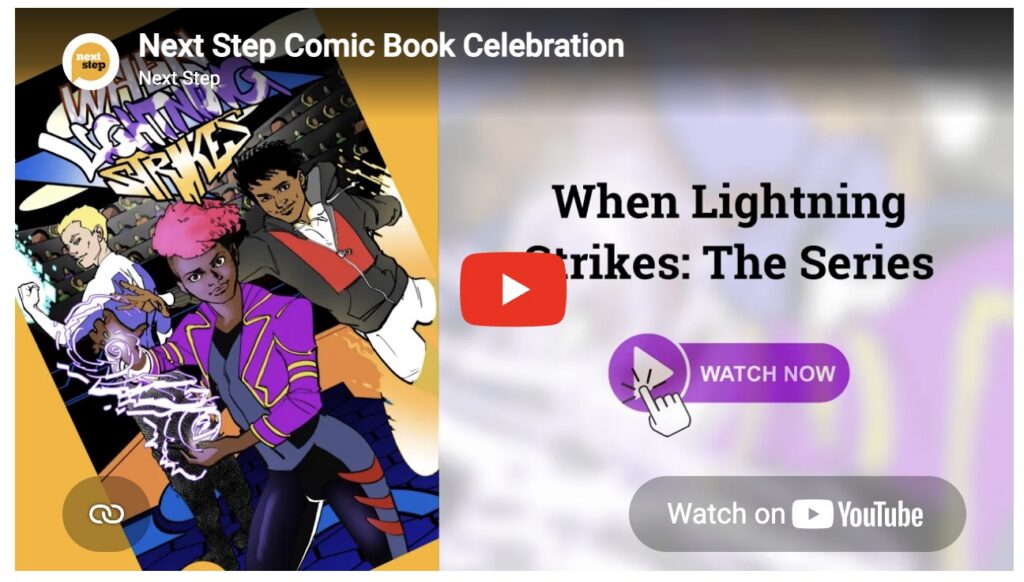
You can also also watch the full panel video here.
One of my favorite parts of this project was hearing directly from the people behind the story. Program Director Kepler Jeudy spoke about the importance of creating opportunities for young people to tell their own stories. Youth leaders Niara Phillips and Ashanti Sturgis shared what the project meant to them personally. Niara reflected, “It can be scary, but with people to guide you, it will be okay,” while Ashanti shared a sentiment that captured the heart of the project: “For the first time, I felt seen.”
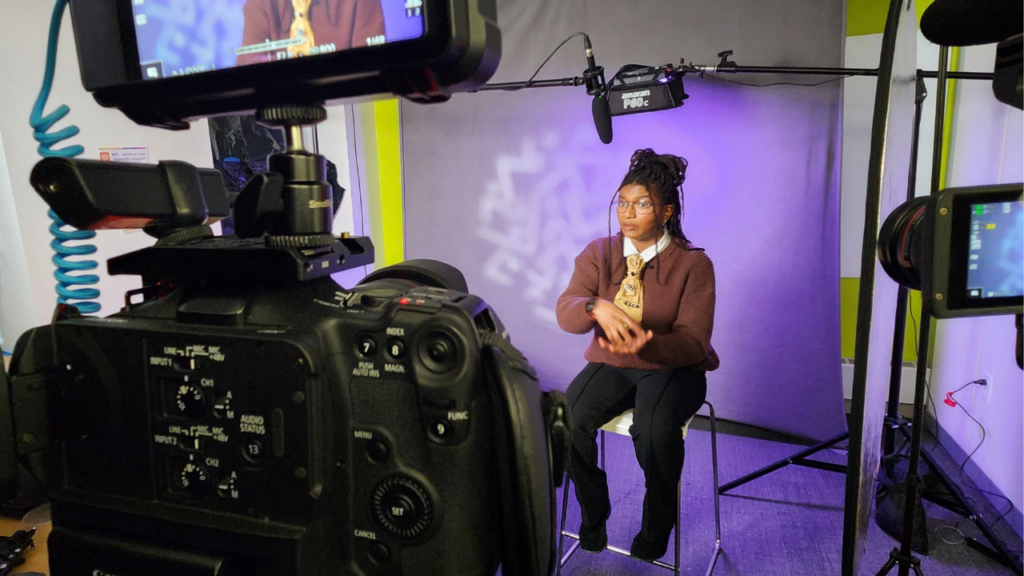
Behind the scenes, our team transformed a conference room with a lime-green wall into a funky interview studio. We blacked out the windows, covered the green wall with a backdrop, and incorporated purple lighting. This was inspired by the comic book’s visual identity. By the time we finished, you would never have guessed it started as a standard conference room.

While interviews were taking place upstairs, the event itself was unfolding throughout the venue. One particularly memorable element was an exhibit featuring enlarged pages from the comic books displayed throughout the hallways. Guests could walk through the artwork, spend time with the stories, and engage with the project in a way that felt more like an immersive experience than a traditional event. Having a three-person crew allowed us to capture all of it. We captured the panel discussion, audience reactions, networking moments, the artwork, and the overall energy of the day.
By approaching the event video production strategically, we were able to capture not just what happened, but why it mattered.
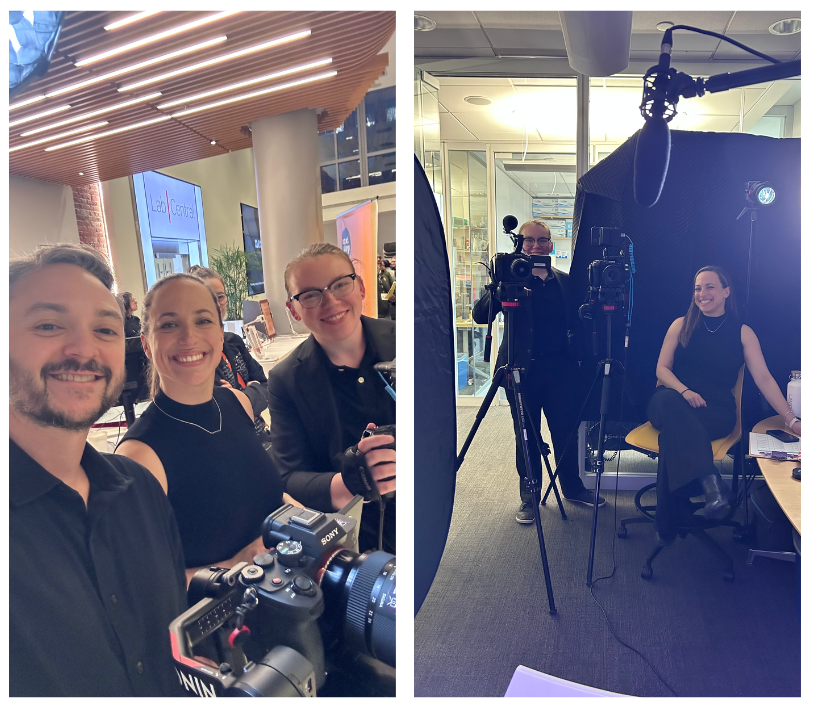

One piece of feedback from the client has stayed with me. They told us that we had not only captured their message, but also that we made them “look cool!” I love that!
I loved that feedback because it reflected something they had shared from the very beginning. They wanted people to see that their work is important, but also creative, engaging, and full of energy. Too often, organizations feel they have to choose between showcasing their mission and creating content that feels dynamic and exciting.
The strongest stories do both.
Sometimes the goal isn’t simply to document an event. It’s to create content that helps a mission reach further than the room it started in. If you’re thinking about how video can extend the impact of your next event, I’d love to connect.


